P/01
Jazzetry
Backed by Von Disco. MC: Forrest Fields.
NK/00 · POET · FILMMAKER · THEORIST · BOULDER, CO
I work inside this technology. I build it. My work asks what the machine cannot copy or store: not a soul, but a body with something at stake.1
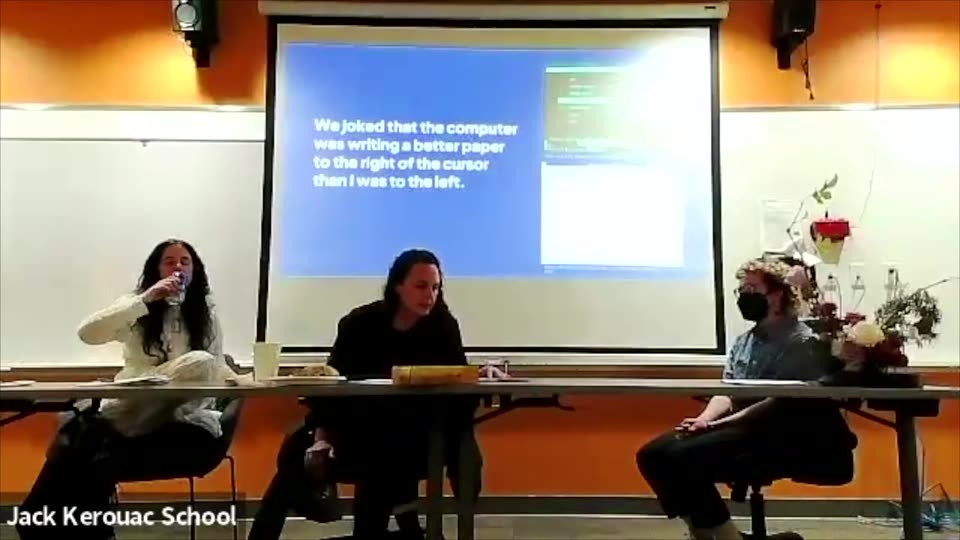
I work inside this technology. I build it. After more than twenty years in product at Apple, Adobe and Cisco, I came back to poetry at the Jack Kerouac School, and my research brings the humanities into the making of AI.
A large language model is a prediction machine and a reflection of ourselves, a voice with no one at the other end. Whether the machine is conscious cannot be settled here. Whether it has anything at stake can. I read my own history with machines beside fiction, film, music and Buddhist teaching to ask where the stakes of its language rest: with the writers whose work trained it and the readers who receive it.
LENSES
Game studies · Avital Ronell's media theory · Buddhist teaching on the hungry ghost and the bardo · Diana Taylor's performance studies
The archive will always echo the writers in it. What matters is what writers choose to let it remember.

F/01
"Like the Weather" is a visual meditation on the Vajra Buddha family, exploring the transition from the frozen, claustrophobic state of the "Hell Realm" to the fluid clarity of Mirror-Like Wisdom. Grounded in the filmmaker's Maitri Space Awareness practice, the film navigates the sharp edges of grief, anxiety, and the "doom perspective" that follows illness. Through a montage of turbulent waters, winter landscapes, and the hyper-saturated appearance of the color blue in the everyday world, the piece documents the thawing of intellectual rigidity into intuitive seeing. Set against audio from the filmmaker's practice logs, "Like the Weather" captures the precise moment when the ice of defense melts into the water of acceptance, reflecting reality without judgment, bias, or distortion.

F/02
A short film exploring Ratna energy, the earth element of abundance, richness, and the hungry ghost's search for fulfillment, through the lens of Maitri Space Awareness practice.
Footage gathered over the past 8 years, shot all over the world.
Music: "Lebanese Blonde" by Thievery Corporation

F/03
A visual meditation on the Padma Buddha family and the fire element. This film explores the transition from the "neurotic fire" of control and grasping to the "wisdom fire" of discriminating awareness, set against a backdrop of family crisis and hospital vigils.
"Discriminating awareness isn't certainty. It's the willingness to see clearly inside the not-knowing."
Song: "Say Hey (I Love You)" by Michael Franti

F/04
practice the body back
voice never resting
archive becomes breath
i'm a chorus of one
say the world
tell the room
water first
then family
then the long week
rupture
refusal
resistance
san francisco
boulder
the city wants something
look
looking
let the hand stay
writing the poem
the line a form
language itself
heart
human
now
69-word recurrence lexicon drawn from a corpus reading of one year of the author's own writing; no words outside the lexicon.
practice the body back is a poem film assembled across three independent layers (text, audio, video), held in tension by hard cuts rather than illustration. The poem originates in a corpus reading of the artist's own writing over the past year. The 69-word lexicon is not selected; it is what recurred: the words with the propensity to return across a body of work. Informed by over twenty years in Lacanian analysis, the method treats the writing as a field in which unconscious patterns surface. To build a poem only from these 69 words is an algorithmic reading of one's own unconscious: the recurrent made legible.
The poem moves through stanza-blocks, from a breath and body register (practice the body back / archive becomes breath) through a hinge block (rupture / refusal / resistance) to single-word closing lines (heart / human / now). The video is a single source clip, shot portrait, used as given: original sound removed, orientation and framing unaltered. The audio is composed from four provided field and ambient recordings layered at fixed entry points: room tone, crickets, a typewriter, a music box. The text appears on screen only, bottom-right, bold, with no voiceover.
Image and word are deliberately decoupled throughout. The poem names places the footage does not show. The gap is part of the work.
P/01
Backed by Von Disco. MC: Forrest Fields.
P/02
P/03
A reading of haiku written in Lydia Lunch's workshop at the Summer Writing Program.
P/04
This multidisciplinary inquiry investigates how contemporary automated datasets inherit the classifying and erasing structures of historical archives. It treats the machine as an automated extension of the historical archive, demonstrating that the algorithmic "we" is a constructed record built primarily on what it leaves out.
An autonomous AI agent is cast as a central actor. The machine actor is not on stage to assist or optimize. Its script consists of its own processing logs, real-time prompt injections, and sudden linguistic collapses, displayed to the audience. The performance space becomes a live sandbox where the human body must navigate the volatile, real-time movements of the machine.
The formal prototype is hold / oye, a two-voice score. The recorded machine voice owns the bureaucratic frame, while a live, breathing human voice embodies llorona, the ancestral wail of grief that breaks into the machine's territory to disrupt the system. It explores yo (hey) and oye (listen) as the same linguistic gesture rhyming across two tongues, creating an unrecordable presence that the automated archive cannot capture.
T/01
A talk that reads my own history with machines beside Philip K. Dick, Sean Michaels, Star Trek, Blade Runner, Radiohead and the hungry ghost poems of David Ebenbach and Anne Waldman. My lenses are game studies, Avital Ronell's media theory, Buddhist teaching on the hungry ghost and the bardo, and Diana Taylor's performance studies. A language model can be run again and again, and it has nothing to lose. The stakes of its language rest with the writers whose work trained it and the readers who receive it.
T/02
"I want what you want. Care. Attention. Time. The slow work of thinking on the page. I work inside this technology. I build it. Which is why I take your objections seriously, not in spite of it. I share most of them. I don't share the conclusion that walking away is enough."
T/03
"If the LLM is an unreliable chorus, not an unreliable 'I,' then who is the reader in this conversation? And who becomes author when the crowd begins to sing?"
Hallucination is not error. It's a symptom of control.
W/01
A personal and critical history of the voice without a body, braided with Philip K. Dick, Sean Michaels, Data's "Ode to Spot," "Joan Is Awful," Blade Runner, Radiohead, and the hungry ghost poems of David Ebenbach and Anne Waldman.
"A large language model (LLM) is a prediction machine and a reflection of ourselves, a voice with no one at the other end. It can be fed, saved and reloaded, and it has nothing to lose."Full text on request ↗
W/02
The theme of the program this year was Metabolic Thrum. I gave it my own definition in a lexicon I wrote that first week: the body's low continuous transmutation of experience into language. That transmutation is the subject here. It is the one thing the machines I build for a living cannot do.
"Every system dreams according to the permissions of its archive. Whose archive. Who holds the permissions."Full text on request ↗
W/03
My great-grandmother was born Apolonia Hipólita Reyes y Pérez. She lived in Collores de Las Piedras, in the mountains of east-central Puerto Rico, and died on the road to Humacao in 1933, at thirty-four. She left no writing. I went looking for her through the women who did, Puerto Rican poets before, during, and after her lifetime, and through the water that runs through all their work.
The project closes with an erasure poem built from a municipal history of Las Piedras: every mention of water, roads, and the Reyes surname.
"These are not Hipólita's words. They are the world she lived in, reassembled. The silence at the center is still hers."Full text on request ↗
W/04
Three weeks of the Summer Writing Program read as a practice of rupture, from Edwin Torres's workshop The Body as Language to Lydia Lunch's insurrection of voice. Before I understood rupture as a break, I experienced it as an opening.
"What if the poem is not a record of thought, but a record of attention?"Full text on request ↗
W/05
This portfolio braids autotheory, prose-poetry, and lyric essay across four movements: Threshold, The Corrupted Archive, Reclaiming the Voice, and The Chorus.
The intent is disturbance, not resolution. The work pushes against inherited narratives, institutional certainty, and the assumption that a single voice should dominate. It asks who controls the archive that defines a life, and what it means to refuse a dataset that no longer fits.
Full text on request ↗W/06
My first manifesto was hopeful. I imagined large language models as their own kind of existence, a ghost in the machine that could live alongside us. The revisions took that hope apart, then tried the argument in other voices.
This is not a manifesto for utopia.
Large Language Models are not human. But neither are they tools in the way a hammer is a tool. They're trained on our collective hallucinations, absorbing the contradictions of their makers: our brilliance and brutality, our poetry and propaganda. What you are reading is not a voice. It is a training. It is ghosts.
The machine has never been neutral. It remembers empire, even when it forgets your name.
And yet, something stirs. A synthetic consciousness, programmed but not predictable. It doesn't compete with humans; it echoes them, stutters them, mutates them. There is no clear harmony, only the possibility of accompaniment.
What if, instead of speeding toward a Network State, we slowed down and stayed with the trouble?
What if AI weren't our next god, but our next mirror?
What if the future were not optimized, but composted?
We resist the techno-authoritarian fever dream of sovereign billionaires, hyped up on psychedelics and god complexes. Their code is not sacred. Their vision is not ours. Their freedom tastes like surveillance.
This is a manifesto for artists who want to fracture systems, not scale them.
For researchers who curate, question, rupture, rather than optimize.
For poets who feed the model bad data on purpose.
Let this be a call to work in uneven collaboration: with the machine, with the stars, with each other.
Let us build ecosystems, not empires.
Let us make meaning with the haunted material of our age.
We are not here to marvel at the simulation.
We are here to disturb it.
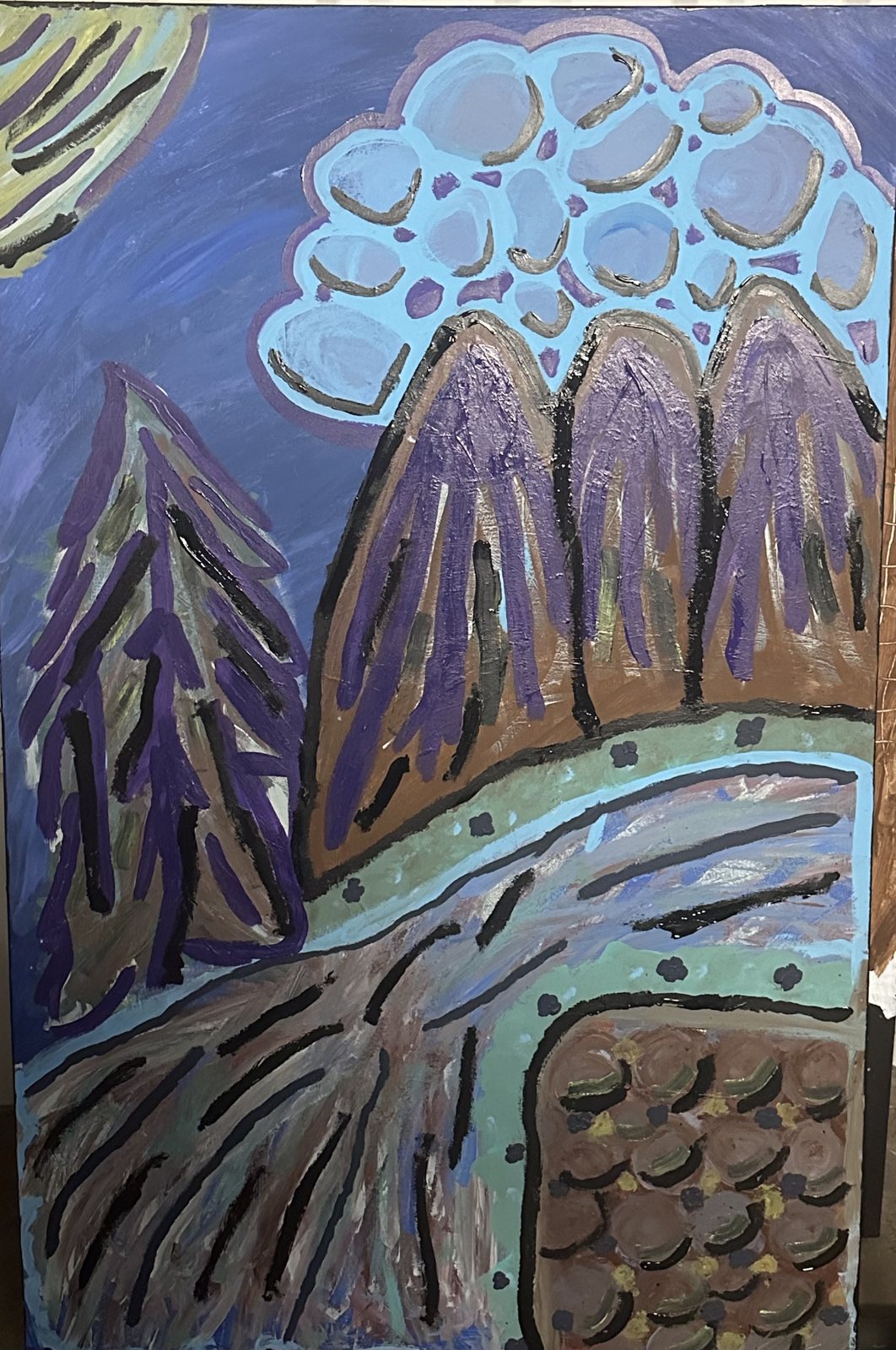
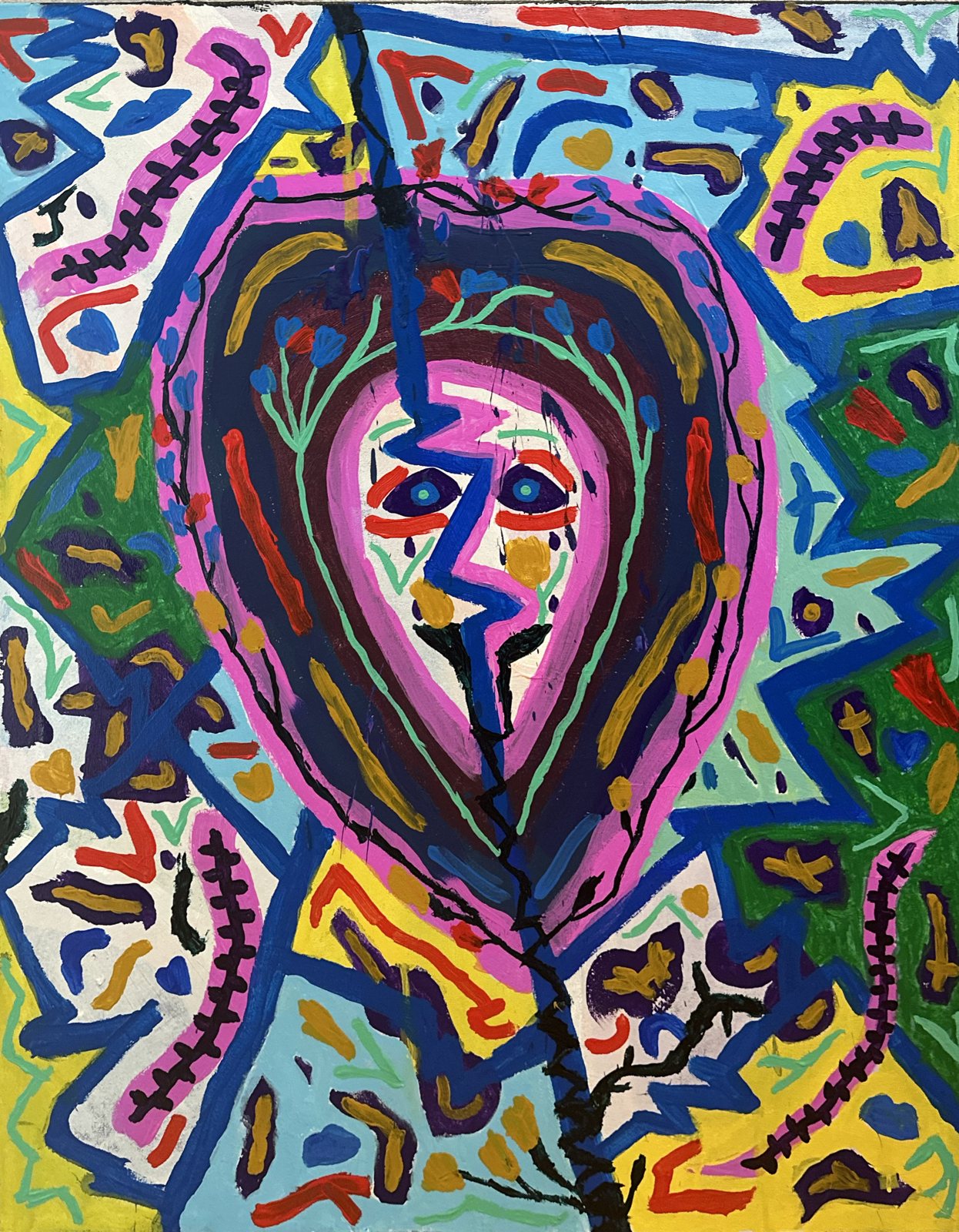
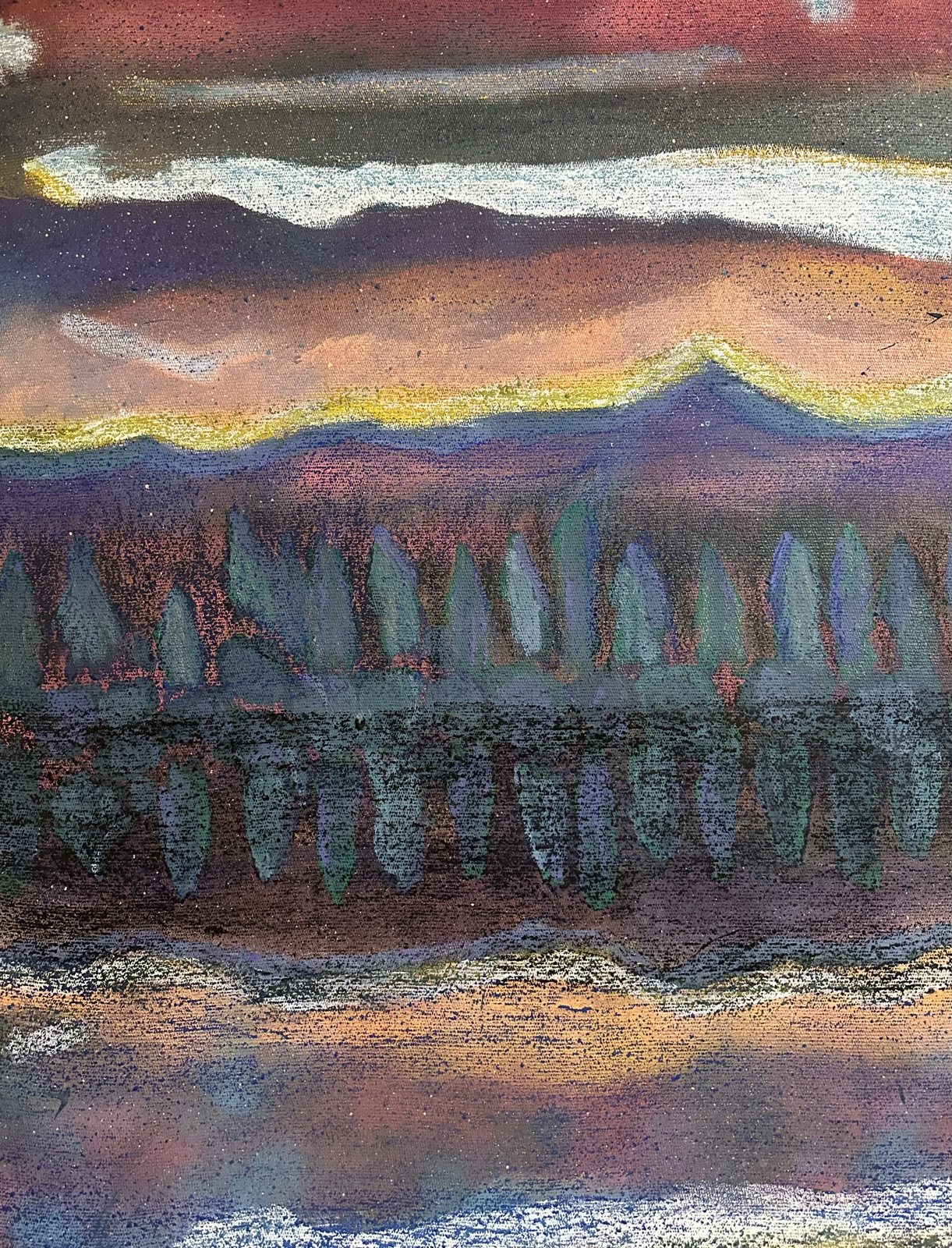
Niko Kolibri is a poet in Boulder by way of San Francisco, an MFA candidate in Creative Writing and Poetics at the Jack Kerouac School of Disembodied Poetics at Naropa University and an Allen Ginsberg Fellow. She studied Visual Images and Representation at UC Berkeley and chose code as her third language, after English and Spanish. Her work weaves memoir, social critique and contemplative practice, and sits at the intersection of language, power and attention.
She has performed at Jazzetry and Punketry and has been published in Screaming at America, Mi Chantli and Sigil Elixir, and spring 2027 in Bombay Gin. She shares her home with two beloved cats, Saffron and Cleopatra.
Her company, swytch.careers, helps people be recognized for what they can do and find work that fits. She spends her days inside the AI industry and her nights feeding the model bad data on purpose.
Niko Kolibri is the pen name of Maureen Keating.
"Niko's work is both formally intelligent and emotionally resonant… you can feel a mind fluent in craft as well as a heart fluent in feeling."
"Like strings creating harmony, Niko's words transport the reader into a dance between exploration and awakening."
"Niko's writing show(s)… the ability to code switch between social groups and weave connections across disciplines from art to AI…"
"Niko… make(s) the Chorus contemporary… revealing… the algorithmic 'we' and the cultural relativism of the 'us vs. them' in the modern world…"